

When you're grieving the loss of a family member, the last thing you want to deal with is a drawn-out, confusing legal process. One of the first questions we always hear is, "how long does probate take?" The honest answer is that it varies—a lot. It can be wrapped up in a few months for simple estates or stretch out for well over a year for more complex ones. At Carolina Estate Services, our primary goal is to help you navigate this process efficiently, and we start by offering a schedule a free consultation to assess your specific situation.
Your Guide to the Probate Timeline

Think of probate as the official, court-supervised process for tying up your loved one's final affairs. The court's job is to validate their will, make sure all their debts are paid off, and see that their remaining assets get to the right heirs. While that might sound pretty straightforward, the journey has several stages, and each one takes time. Our services are designed to manage every one of these stages for you.
Across the United States, the average probate process takes about 16 months. This number gives you a general idea of how long it takes for the courts to handle everything from start to finish, from validating the will to finally distributing the property.
Estimated Probate Timelines At a Glance
Every estate is different, but we can group them into a few general categories to get a better sense of timing. This table gives a quick overview of what you might expect based on how complex the estate is.
| Estate Complexity | Typical Timeframe | Key Characteristics |
|---|---|---|
| Simple Estate | 6 – 9 months | Clear will, few assets, minimal debts, and no family disputes. |
| Average Estate | 9 – 18 months | May involve real estate, some debts, and multiple beneficiaries. |
| Complex Estate | 18+ months | Involves business interests, significant assets, tax issues, or legal challenges. |
As you can see, the timeline really depends on the specifics. A straightforward case can move along relatively quickly, but add in a few complications, and the clock starts ticking a lot slower. Our expertise lies in identifying and managing these complexities to keep the timeline as short as possible.
Navigating the Core Stages
The length of probate is almost entirely dictated by the steps required for a particular estate. Since no two situations are ever exactly the same, the timelines can be worlds apart.
Generally, though, the process follows a predictable path:
- Filing the petition: This is the first step, where you officially ask the court to open the probate case.
- Appointing an executor: The court formally names the person responsible for managing the estate.
- Inventorying assets: The executor has to find, list, and appraise everything the deceased owned.
- Notifying creditors: All potential creditors must be notified so they can make claims against the estate.
- Distributing assets: Once debts are paid, the remaining assets are transferred to the beneficiaries.
Each of these stages comes with its own legal requirements and potential for delays. Our firm is dedicated to helping families navigate this process with clarity and efficiency. We know how stressful this time can be and provide the focused support you need to move forward.
You can learn more about our dedicated probate services and how we can help with your specific situation. We're here to provide the support you need when it matters most. For personalized advice, schedule a free consultation with our team.
Breaking Down the Stages of the Probate Process
Probate isn't a single event but a series of legally mandated steps. Think of it as a journey with a clear beginning, middle, and end. Grasping this flow is the key to understanding "how long does probate take," since each stage adds its own time to the overall timeline. The entire process is designed to be methodical, making sure every last detail of an estate is handled correctly.
Our experienced team is here to manage this entire process for clients. We handle the paperwork, track the deadlines—a common source of delays—and navigate the legal complexities so you can focus on your family.
The Initial Court Filings
The journey kicks off when someone, typically the executor named in the will, files a petition with the local probate court. This is the official start, opening the case and asking the court to legally validate the will. If no will exists, the court steps in to appoint an administrator who will manage the estate instead.
This first step involves submitting the death certificate and the original will. After that, the court schedules a hearing date to formally appoint the executor or personal representative, giving them the legal green light to act for the estate. We handle all these initial filings to ensure they are done correctly the first time.
Administering the Estate
Once the executor is appointed, the real work begins. This is almost always the longest and most involved phase of the entire probate process. Our team supports executors through every single one of these duties, offering the guidance needed to sidestep errors that could drag things out.
The main responsibilities during this stage include:
- Notifying Heirs and Creditors: Every beneficiary and potential creditor has to be formally notified. Creditors get a specific window of time, often a few months, to file any claims they have against the estate.
- Inventorying Assets: The executor is tasked with creating a detailed list of all the estate's assets—everything from bank accounts and real estate down to personal belongings. This step often requires professional appraisals to nail down the fair market value.
- Paying Debts and Taxes: Before a single dollar can be passed on to the heirs, all legitimate creditor claims, final medical bills, and taxes must be settled using the estate's funds.
These administrative tasks demand meticulous organization and a solid grasp of the legal requirements. A simple mistake, like failing to notify a creditor properly or getting an asset valuation wrong, can bring the entire process to a screeching halt and add months to the timeline. This is where our services provide immense value.
This infographic gives you a bird's-eye view of the major milestones in the probate journey, from that first court filing all the way to the final distribution.
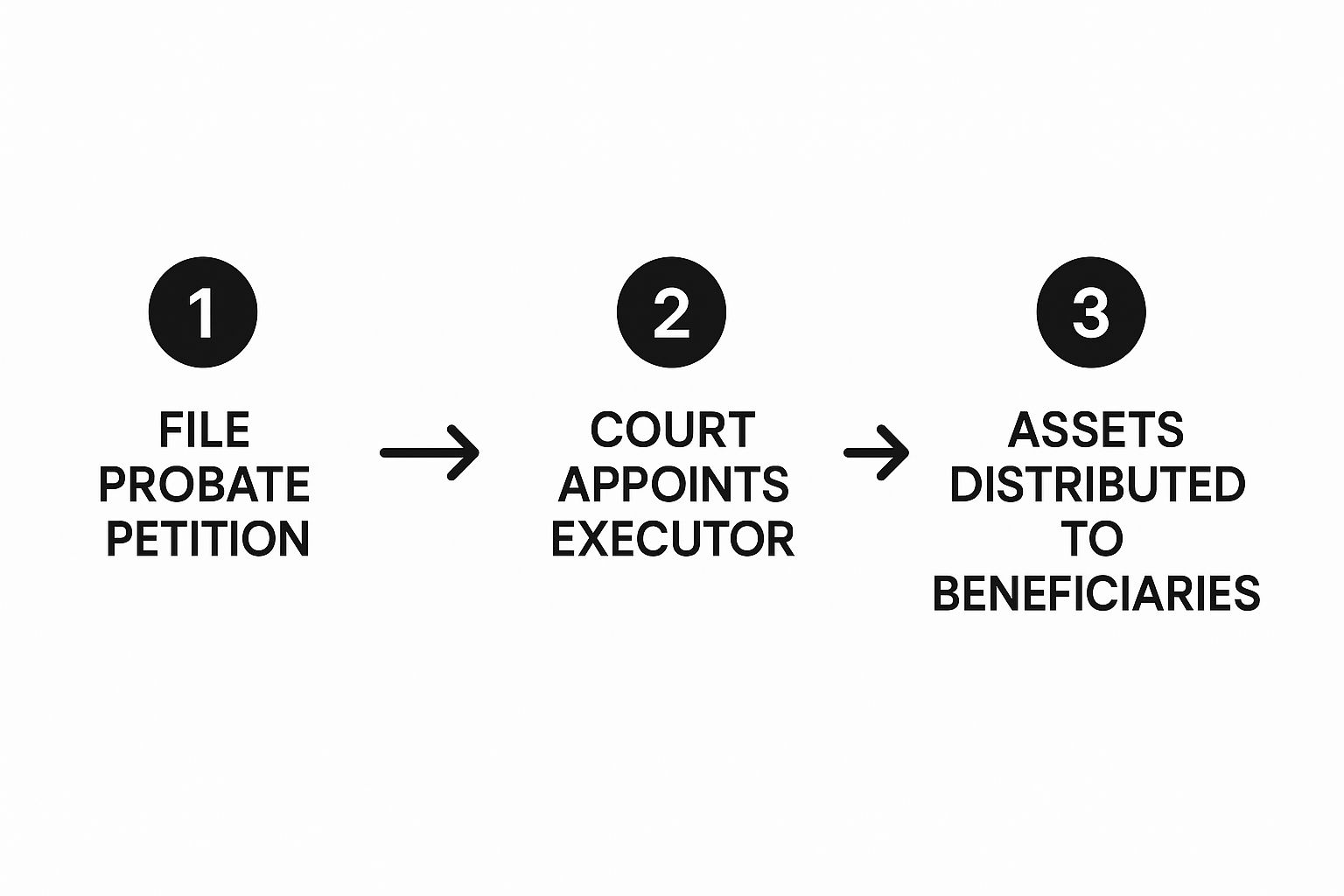
As you can see, probate follows a very structured, court-supervised path where one step has to be fully completed before the next one can even start. Our job is to manage this path for you seamlessly.
Closing the Estate and Distributing Assets
The final stage is all about getting the assets to the right people. Once every debt is paid and the court gives its final approval on the accounting, the executor can finally transfer the remaining property to the beneficiaries, just as the will or state law dictates.
This officially marks the end of the process and the closing of the estate. Our firm's goal is to guide your family through these stages as smoothly and efficiently as we can. To see how our services can make this process easier for you, we invite you to schedule a free consultation.
Key Factors That Influence Probate Duration
Ever wonder why one family settles an estate in just six months while another gets stuck in the process for years? The answer isn't simple, but it almost always comes down to a few key factors that can either speed things up or grind them to a halt. Getting a handle on these variables is the first step to setting realistic expectations.
Our team has seen it all, and a big part of what we do is spotting these potential roadblocks from a mile away. We build strategies to navigate around delays, keeping the process moving and giving you clarity when you need it most.
The Estate's Size and Complexity
One of the biggest timeline drivers is simply the size and complexity of the estate itself. An estate with a single bank account and a car is a world away from one that includes multiple properties, business holdings, and a diverse investment portfolio. It's just a matter of scale.
Each complex asset adds another layer of work. Think valuations, management, and possibly liquidation—all of which take time. This is a core part of our services; we manage these complex assets to ensure nothing is overlooked. Every additional property or investment means more appraisals, more paperwork, and more administrative hurdles, stretching out the overall timeline. You can learn more about how estate liquidation fits into this and impacts the schedule.
The presence of a valid, well-drafted will is arguably the single most important factor for a smooth probate process. A clear will acts as a direct roadmap for the court and executor, minimizing ambiguity and the potential for disputes.
On the flip side, when someone passes away without a will (known as dying intestate), the court has to step in. It must appoint an administrator and figure out the legal heirs based on state law, a process that adds significant time and expense right from the start. We specialize in managing intestate estates to streamline this complex situation.
Potential for Disputes and Claims
Nothing throws a wrench in the probate timeline like a conflict. When beneficiaries start to disagree or someone formally contests the will, the entire process can come to a screeching halt. These disputes often escalate to court hearings and litigation, tacking on months or even years.
Creditor claims can also cause significant delays. The executor is required to notify all known and potential creditors, who are then given a specific amount of time to submit their claims against the estate. If a claim is disputed, it has to be fully resolved before any assets can be distributed to the heirs.
This is where our proactive management makes all the difference. By handling communications carefully and tackling challenges head-on, we work to keep disputes from derailing the entire process and keep things on track. Schedule a free consultation to discuss how we can help manage these challenges.
Comparing Probate Timelines in Different States
One of the first things people learn about probate—often the hard way—is that it’s not a federal process. It’s governed entirely by state law. This means the answer to "how long does probate take?" can change dramatically just by crossing a state line.
What works in Texas simply won't fly in California. A mandatory waiting period for creditors in Florida will likely be different from New York's requirements. These local nuances are exactly why our experienced legal support is so critical for a smooth, efficient settlement.
At Carolina Estate Services, we have a deep, hands-on understanding of state-specific probate codes. Our legal support is built around local rules, helping you sidestep the common procedural mistakes that cause frustrating and completely avoidable delays.
State-Specific Procedural Differences
The legal landscape for probate varies so widely that it creates a patchwork of different timelines and obligations for executors across the country. For example, some states offer simplified or "informal" probate for smaller estates, which can wrap up in a fraction of the time. Others have more rigid, court-supervised requirements for every single estate, no matter the size.
You can see these differences pop up in a few key areas:
- Waiting Periods for Creditors: States require a specific window, usually three to six months, for creditors to come forward and file claims. Our service ensures this notification step is handled perfectly to avoid bringing the process to a screeching halt.
- Types of Probate: Some states are more flexible than others. Texas, for instance, offers various forms of probate, including a streamlined process called "muniment of title" that can be much faster for simple estates with no debt.
- Court Backlogs: The efficiency of the local court system is a huge, often overlooked factor. A congested court in a major metropolitan area will naturally lead to a much longer process than a court in a quieter, rural county.
Navigating these state-by-state variations is one of the toughest parts of administering an estate. A simple misstep in one state's required procedure can lead to the court rejecting your filings, forcing you to restart certain steps and adding months to the timeline. This is a primary problem our services solve.
A Look at Timelines Around the World
It's interesting to note that the challenge of managing probate timelines isn't just a U.S. problem. In the United Kingdom, for instance, the time it takes to get through the process has seen some major swings. In 2023 and early 2024, the average wait time from submitting an application to receiving the grant of probate bounced between 8.8 weeks and 15.7 weeks. Paper applications took even longer, averaging around 15.4 weeks. You can discover more about these international probate trends and what they say about administrative efficiency.
The following table provides a snapshot of how different states handle the probate process, highlighting some of the key procedural differences that can affect how long it takes.
Comparing Probate Processes In Different Jurisdictions
Here's a comparative look at how different legal systems and states handle probate, highlighting key differences in timelines and procedures.
| Jurisdiction / State | Average Timeline | Key Procedural Difference |
|---|---|---|
| California | 9 to 18 months | Requires a formal, court-supervised process for most estates. Very specific rules for notifying heirs and creditors. |
| Texas | 6 to 12 months | Offers "Independent Administration," which requires less court oversight, and unique options like "Muniment of Title." |
| Florida | 6 to 9 months | Has a strict 90-day period for creditors to file claims once notice is published, which can speed up the process. |
| New York | 7 months to 1.5 years | The Surrogate's Court system, especially in larger counties like NYC, can be heavily backlogged, leading to longer waits. |
| United Kingdom | 8 to 16 weeks | The process is centralized, but wait times fluctuate based on application volume and whether it's a paper or digital filing. |
This table just scratches the surface, but it clearly shows why a one-size-fits-all approach to probate is bound to fail.
Understanding these different legal frameworks really drives home why localized expertise is so essential. Our services are specifically designed to address the unique requirements of the relevant jurisdiction, ensuring you stay compliant and keep the process moving forward. If you're facing this complex journey, we invite you to schedule a free consultation to learn how we handle state-specific cases and prevent expensive delays.
How Our Services Help Expedite the Probate Process

While some delays in the probate timeline are simply unavoidable—like a backed-up court system—many of the longest holdups come from things that are entirely preventable. Think administrative errors, missing paperwork, or unresolved family disputes. This is precisely where our services make a critical difference.
We actively work to shorten the probate timeline by managing the details that so often trip up an estate administration. Our goal is to give you peace of mind and an efficient resolution during what is already a difficult time. We do this by anticipating common pitfalls and tackling them head-on before they can snowball into major delays.
Proactive Strategies to Reduce Probate Time
Our approach is built on proactive and meticulous management. We don't just sit back and react to problems; we get out in front of them. For law firms juggling probate cases, effective document management for law firms is absolutely essential for keeping things on track, and we apply that same level of organization to every estate we handle.
Here’s a look at how our direct involvement keeps the process moving forward:
- Meticulous Document Preparation: We ensure every single form, petition, and inventory list is filled out correctly and completely. This simple step helps avoid court rejections that can easily set a case back by weeks or even months.
- Proactive Communication: We become the central point of contact for beneficiaries, creditors, and anyone else involved. Clear, consistent communication prevents the misunderstandings that can otherwise escalate into formal disputes or will contests.
- Expert Navigation of Complex Rules: From properly notifying creditors to hitting crucial tax filing deadlines, we manage the intricate legal requirements with precision. Our experience means we know the rules and deadlines inside and out.
Our hands-on management is designed to systematically eliminate the administrative friction that drags out the probate process. By ensuring every step is executed correctly the first time, we keep the estate on the fastest possible track to settlement.
Our Commitment to an Efficient Resolution
Different legal systems show just how much efficiency can vary. For example, in the UK, the average probate application processing time was recently reported at around 9.3 weeks—a huge drop from 14 weeks the year before. While the simplest cases might get through in 4 to 8 weeks, more complex estates can still take 16 to 20 weeks.
This really highlights the impact that skilled management has on timelines. The comprehensive list of our services shows exactly how we apply this principle, from the initial court filing all the way to the final distribution of assets. We handle the complexities so your family can focus on what truly matters.
We invite you to book a free consultation with our team. We'll listen to your unique situation and explain exactly how our services can help streamline the probate process for your family's estate, providing a clear path forward.
Your Top Questions About Probate Timelines, Answered
When you're dealing with probate, a flood of specific, urgent questions is completely normal. Families often come to us wondering what to expect and how long it will all take. Let's clear up some of the most common concerns we hear.
Our job is to cut through the legal jargon and give you straightforward answers. We handle the complexities so you can focus on what matters most—your family. Talk to us directly by booking a free consultation.
What Happens If a Will Is Contested?
A will contest is probably the single biggest reason a probate timeline gets thrown off track. When an heir or beneficiary decides to challenge the will’s validity, the whole process can grind to a halt. What was once a straightforward administrative task suddenly turns into active, and often lengthy, litigation.
This shift means court hearings, gathering evidence, and making legal arguments, all of which can easily add several months or even years to the process. Our firm is experienced in dispute resolution and often acts as a mediator, helping families find a faster, more peaceful solution before it escalates into a full-blown court battle. This is a key part of our service offering.
Can I Sell Property During Probate?
Yes, you absolutely can sell property while it's in probate, but it’s not as simple as a typical real estate deal. The sale has to get the court's stamp of approval to make sure it’s in the best interest of the estate and all the beneficiaries.
This is a process we manage from start to finish for our clients. We handle petitioning the court for permission to sell, we work directly with the real estate agents, and we make sure every legal box is ticked to guarantee a clean title for the buyer. This hands-on approach is one of the many ways our services keep the sale from getting tangled up in legal red tape.
The best way to sidestep unnecessary delays is to be prepared. A well-written will is the starting point, but having an experienced legal partner like us to keep the process moving is what truly makes the difference.
What Can I Do to Speed Up Probate?
While things like court backlogs are out of your control, you aren't powerless. The most impactful thing anyone can do is to create a will that is clear, valid, and leaves no room for misinterpretation. If you’re the one administering an estate, being organized and responsive is everything.
As your legal partner, our main goal is to push the process forward. We do this by tackling all the administrative work efficiently, managing communication between everyone involved, and spotting potential legal hurdles before they become major roadblocks. Our experience helps us avoid the common missteps that can add months to the probate timeline. If you're looking for more information, you might find some answers in these general FAQs on legal and property processes that can sometimes relate to estate matters.
Ultimately, our services are designed to absorb the complexity and keep things moving. We know the ins and outs of probate law and use that expertise to ensure a smooth and timely settlement for your family.
At Carolina Estate Services, we are committed to providing the expert support you need to navigate probate efficiently. If you have more questions or need guidance on your specific situation, schedule a free consultation with us today.


