

Figuring out how to price everything in an estate sale is a delicate balance. It's part art, part science, blending careful research, honest condition assessments, and a keen awareness of the current market to land on an item's fair market value. This is a core part of what we do at Carolina Estate Services. The journey begins with a clear understanding of the difference between retail, auction, and liquidation values—a crucial first step before a single price tag is written.
The Three Pillars of Smart Estate Sale Pricing
Pricing items for an estate sale isn't about guesswork; it's a strategic process grounded in real-world data. It's a common mistake to think an item's original price has much to do with what it's worth today. In reality, an item's value is constantly shifting, influenced by current demand, its condition, and how rare it is. This is the core knowledge our team at Carolina Estate Services puts into practice every single day to make sure you get the most from your sale. Our services are built around this expert valuation.
The whole pricing puzzle rests on three key valuation concepts:
- Retail Value: This is what something would sell for in a traditional store, brand new. It’s the highest possible price and isn’t really used for estate sale pricing.
- Auction Value: This is the price an item could bring in a competitive bidding scenario. It can swing wildly depending on who’s in the room and is typically reserved for hot-ticket collectibles.
- Liquidation Value: This is the most important one for us. It’s what a ready buyer will pay a willing seller within a tight timeframe. It’s all about moving items efficiently while still getting a fair price.
To give you a clearer picture, here's a quick breakdown of how these methods compare.
Valuation Methods At a Glance
Here’s a quick comparison of the different valuation methods used in estate sales and what they mean for your items.
| Valuation Method | Best For | Typical Price Point |
|---|---|---|
| Retail Value | New-in-box items in a traditional store setting | Highest; baseline for comparison only |
| Auction Value | Rare collectibles, fine art, high-demand antiques | Variable; can be high with competitive bidding |
| Liquidation Value | Most estate sale items (furniture, decor, etc.) | 30%-50% of original retail, adjusted for market |
Ultimately, liquidation value is where we live. It's the practical, real-world number that gets items sold in a weekend.
Finding the Sweet Spot for Pricing
Our team’s real skill lies in nailing that liquidation sweet spot. For instance, a general industry rule of thumb is to price items at about 30% to 50% of what they originally sold for. An antique dining table or a desirable piece of mid-century modern furniture in pristine condition might fetch a price at the higher end of that range. On the other hand, everyday household goods will be priced on the lower end to encourage buyers to grab them quickly.
You can dive deeper into these strategies in our comprehensive estate sale pricing guide to see how the pros break it down.
The goal isn't to match what you see on eBay or Facebook Marketplace, where an item can sit for months. We price things to sell to the local market within a two or three-day sale. This is a critical difference that separates a profitable, cleared-out home from one with a ton of leftovers.
How We Simplify the Pricing Process
Trying to navigate these values for hundreds—sometimes thousands—of items is completely overwhelming. That’s where we come in. At Carolina Estate Services, we handle this entire complex analysis for you as a key part of our services.
Our crew meticulously researches, appraises, and prices every single item in the home, from the fine jewelry in a forgotten drawer to the last spatula in the kitchen. We make sure every price tag reflects its true current market value. We take the emotional weight and the analytical heavy lifting off your shoulders, turning a massive undertaking into a smooth, profitable experience. This is exactly what we do.
If you’re just starting and feel unsure, our pricing guide is a great resource. Better yet, let our experts do the work for you. Schedule a free consultation with us today, and we can show you how our professional pricing services will maximize the returns from your estate.
Uncovering an Item's True Market Value
Pricing items for an estate sale is far more of an art than a science, and it all starts with solid research. Anyone can look up what an item is listed for online, but that’s just a starting point—often a misleading one. The real secret, and the same professional approach our team takes, is digging in to find out what buyers have actually paid.
That single piece of information—the final sale price—is the difference between pricing based on hope and pricing based on reality. Our experts dive deep into historical sales data to pin down an item’s true market value. We don't guess; we use specific, powerful tools to find concrete evidence of what similar items have recently sold for. This research is a fundamental component of what we do.
Using Professional Research Tools
Pinpointing a precise value means going far beyond a simple Google search. Our team uses a multi-pronged approach to research that includes some of the best tools in the business.
- eBay's 'Sold' Listings: This is our go-to for a real-time pulse on the market. By filtering searches to show only completed sales, we see what collectors and everyday buyers are willing to pay right now for everything from vintage toys to designer handbags.
- Specialized Databases: For antiques and collectibles, we turn to subscription-based services like WorthPoint, which aggregates sales data from hundreds of auction houses. It gives us access to millions of data points, ensuring our pricing is backed by an extensive sales history.
Here’s a glimpse into how a platform like WorthPoint helps us uncover an item's history and value.

This screenshot shows exactly how we can look up an item and immediately see its past sales records, descriptions, and—most importantly—the final prices. This is the hard data we need for accurate pricing.
The Details That Drive Value
Beyond online research, the physical characteristics of an item can dramatically alter its price. Our professionals are trained to spot the small details that an untrained eye might easily miss.
A faint maker's mark on the bottom of a vase, a signature on a painting, or the original box for a vintage board game can be the difference between a $10 item and a $500 one.
For example, a simple-looking ceramic bowl might look like just another piece of dishware. But if our team identifies a Rookwood Pottery flame mark on the bottom, we know we’re holding a valuable piece of American art pottery and price it accordingly. This expert evaluation is a core part of our services and ensures you don't accidentally give away a treasure.
Guesswork is not a strategy, especially when it comes to high-value items like fine art, jewelry, or rare antiques. These pieces require a higher level of scrutiny to protect their value.
At Carolina Estate Services, we recognize when an item's value extends beyond our internal expertise. For these special pieces, we bring in our trusted network of certified appraisers. This guarantees that your most valuable assets are priced with certified authority, giving you peace of mind and maximizing your financial return. This is an important part of what we do.
This entire research and appraisal process is incredibly time-consuming, which is why so many clients trust our team to manage it all.
If you're facing a house full of items and don't know where to begin, let us handle the heavy lifting. Schedule a free consultation with our team, and we’ll show you how our professional research and pricing services can make your sale a success.
How Condition and Rarity Impact Your Bottom Line
Ever wonder why one china plate sells for $5 while another, almost identical one, goes for $500? The answer almost always boils down to two critical factors: condition and rarity.
These twin pillars of value are what separate everyday secondhand goods from sought-after collector's prizes. Learning to price items for an estate sale is really about training your eye to see what the pros see.

This is where an expert eye becomes so important. Our team is trained to spot the subtle—but significant—details that can dramatically change an item's bottom line. It’s this experience that ensures a price tag accurately reflects an item’s true market worth. This is a core function of our services.
Assessing an Item’s Condition Like a Pro
That phrase "mint condition" isn't just a buzzword; it's a massive price driver. An item that looks like it just came out of the box will always command a higher price than one showing its age. When we evaluate an item, we're methodical and look for the exact flaws a discerning buyer will notice.
You should do the same. Here’s what we look for:
- Furniture: Are there deep scratches, water rings, or wobbly legs? Is the finish faded? Original hardware and a well-preserved finish are huge pluses.
- Collectibles: Original packaging is king. A vintage action figure still in its unopened box can easily be worth 10 times more than one that's been played with.
- Glassware & China: Hold each piece up to a bright light to spot any hairline cracks or tiny chips. You also want to check for fading patterns or utensil marks from use.
This careful, piece-by-piece assessment is a core part of how our services add value. Overlooking a small chip or a missing part can cost you dearly. Being honest and upfront about an item's condition builds trust with buyers and justifies a premium price for the pieces that are truly pristine.
Remember, a buyer's perception is everything. Flaws immediately signal a lower value, while pristine condition creates the feeling of finding a real treasure, encouraging a faster, higher-priced sale.
Determining Rarity to Maximize Profit
Rarity is the other half of the value equation. Is the item one of a million, or one of a thousand? A common piece of Fiestaware might only sell for a few dollars, but a rare color or a discontinued shape could be worth hundreds.
Figuring out an item's rarity is a specialized skill our team puts into practice every single day. We look for clues like production numbers, limited edition markings, and other indicators of scarcity. For instance, a piece of furniture from a well-known designer is inherently rarer than a mass-produced item. It's this kind of detail that turns a simple cleanout into a highly profitable event. This expert analysis is exactly what we do.
Properly assessing condition and rarity takes time and a trained eye—two things that are often in short supply during an emotional and stressful transition. For more insights on getting ready, check out our guide on how to prepare for an estate sale.
Our professionals handle this entire evaluation process, making sure no rare gem gets priced like a common stone. If you're unsure about the hidden value in your estate, let our experts uncover it for you. Start with a free consultation.
Crafting a Dynamic Discounting Strategy
A static price tag is a surefire way to have items left over after an estate sale. To make sure that doesn't happen, every successful sale we run leans on a dynamic discounting strategy—a planned approach that builds excitement and keeps shoppers coming back day after day.
It's a simple but powerful method: start with firm pricing on day one, then introduce progressive markdowns on the following days. This ensures you get a successful clean-out by the end of the weekend.
At Carolina Estate Services, we don’t just slap on a price and cross our fingers. We’re actively managing the sale from the moment we open the doors. Our team uses a fluid pricing model, adjusting on the fly based on real-time foot traffic and sales data to make sure we’re hitting the estate's goals. This hands-on management is a core part of our services.
The Psychology of Scheduled Markdowns
The real secret to a dynamic strategy is creating a sense of urgency. A typical multi-day sale will start with full prices on the first day, but seasoned shoppers know the deals are coming.
By the second or third day, we start dropping prices by 25% to 50%. This tactic gets people buying and helps clear out the remaining inventory. It’s a delicate balance between maximizing revenue early on and keeping buyer interest high for the entire event.
Pricing isn't a one-and-done decision. It's a constant evaluation of an item's condition, rarity, and what the market will bear.
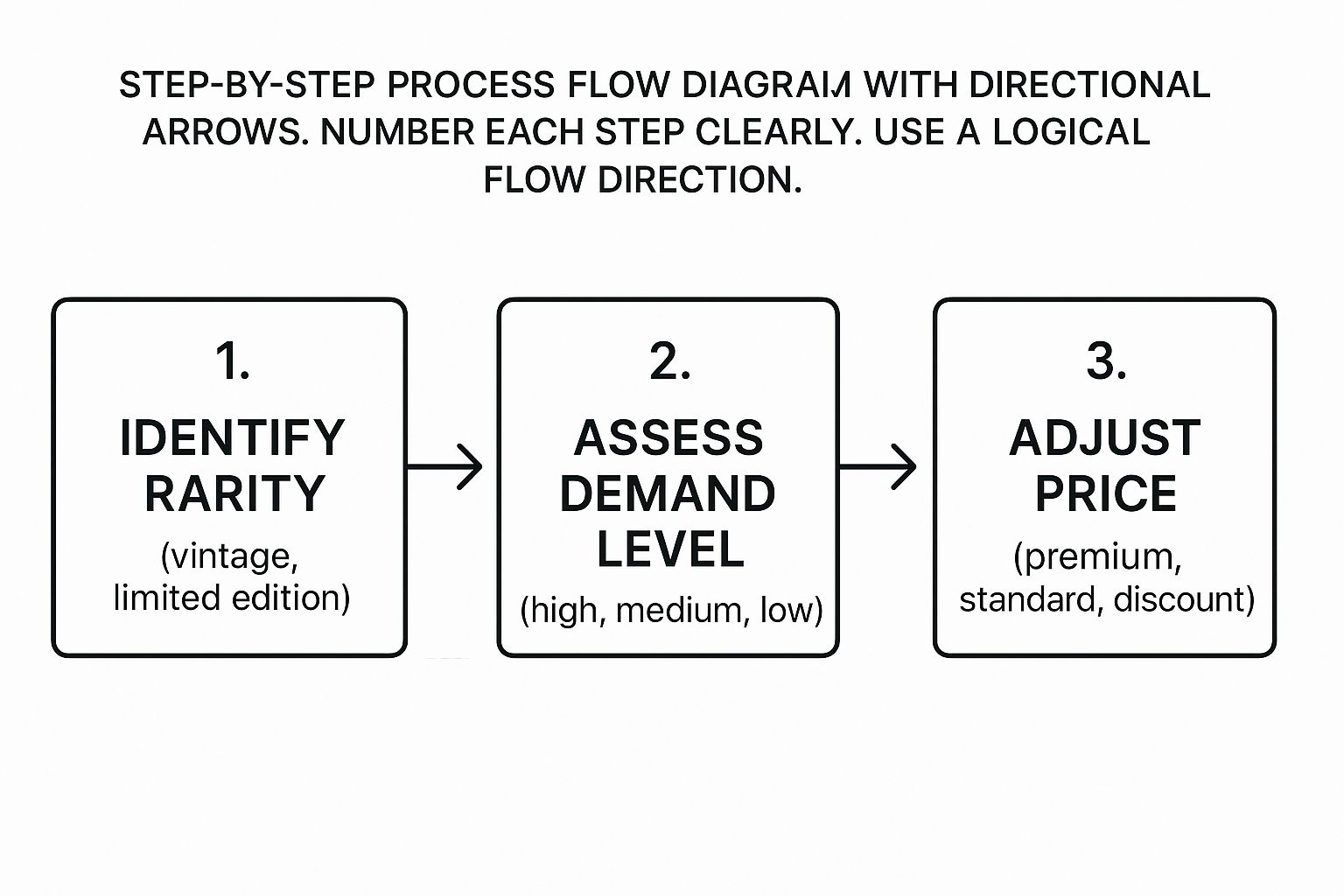
This flow shows how we think about pricing—it’s an ongoing process, not just a single step.
Professional Secrets for Moving More Inventory
Beyond just slashing percentages, we have a few other tricks up our sleeve to encourage sales and make sure nothing gets left behind. One of the most effective tactics we use is strategic bundling.
- Bundling Low-Value Items: We’ll often group together things like kitchen utensils, mismatched glassware, or craft supplies into one single, attractive price. It's a great way to encourage bulk purchases and clear out the "smalls" quickly.
- Pricing 'Smalls' for Impulse Buys: We strategically place low-cost, desirable items near the checkout counter. It's an old retail trick that works wonders—shoppers almost always add one last thing to their pile, which really boosts the overall sale total.
A well-executed discounting plan is about so much more than just cutting prices. It's about tapping into shopper psychology and actively managing the sale's momentum from open to close.
This dynamic approach is just one piece of a professionally run event. To get the full picture, check out our detailed guide on how estate sales work.
If managing a multi-day pricing strategy sounds like a headache, you're not wrong. It can be. Our team has perfected this process over hundreds of sales, and we'd be happy to take the pressure off your shoulders. Learn more during a free consultation.
Staging and Tagging for Higher Sales
How you price estate sale items is only half the battle. The way you present them? That can make or break a sale. A well-staged home with clearly tagged merchandise has a direct impact on your final profit, building buyer confidence and encouraging them to spend more.
Clean, easy-to-read price tags are absolutely non-negotiable. They establish trust and create a professional atmosphere right from the start.

This is where the real work begins, and it’s a part of our services that truly makes a difference. We don’t just put prices on things; we transform a residence into an inviting and organized retail space. It's a labor-intensive process, one we’ve perfected over countless sales, all designed to drive higher revenue for our clients.
The Power of Professional Presentation
Think of effective staging as your most powerful sales tool. Our team excels at creating attractive displays and little vignettes that help shoppers visualize items in their own homes. A well-placed lamp on an end table or tastefully arranged dishware on a dining room table does more than just look good—it tells a story and makes the items far more desirable. This is what we do to elevate your sale.
This careful arrangement prevents that chaotic, rummage-sale feeling that can instantly devalue everything in the house. Instead, it creates a boutique-like experience that justifies the prices on the tags.
Shopper psychology plays a huge role in an estate sale. An organized, clean, and beautifully staged environment makes buyers feel more confident in their purchases and more willing to pay the asking price.
To get that crisp, professional look for your pricing, consider designing and printing custom hang tags. They offer a clean, uniform appearance that reinforces the quality of the sale.
Tagging Every Single Item for Success
Every single item, from a high-end sofa down to a single coffee mug, needs its own price tag. This meticulous process can feel daunting, especially when you’re dealing with a lifetime of belongings.
The sheer volume of items at a sale can be staggering. The most common quantity falls between 1,000 and 1,999 items (23.17% of sales), with the next largest group being sales with 250 to 999 items (17.77%). Our team is equipped to handle estates of all sizes, ensuring every last piece is tagged accurately.
This is what we do best: managing the thousands of details that go into a successful event. We handle the cleaning, organizing, staging, and tagging, turning what might be a cluttered home into a shopper's paradise. It’s a massive undertaking, and our services are designed to manage it from start to finish.
Let us handle the details for you. Schedule your free consultation today to see how we can maximize your sale’s potential.
Common Questions About Estate Sale Pricing
Even with a solid game plan, pricing items for an estate sale always stirs up a lot of questions. It's easy to feel overwhelmed when you're navigating a lifetime of someone's possessions. Our goal here is to bring some clarity to the process and show you how our team can make the entire experience simpler for your family.
We get asked these questions all the time. After years in this business, we’ve pretty much seen it all, which allows us to handle these situations with the confidence and professionalism that is a cornerstone of what we do.
What If We Disagree on an Item's Price?
It’s completely normal for family members to have an emotional connection to certain items, and that can definitely color how they see its value. When a client feels something should be priced higher, our first step is to walk them through the research that backs up our valuation.
We’ll share data from recent comparable sales and give you the real story on current market demand. Our entire process is an open book. We're not just slapping price tags on things; we're partnering with you to get the best possible results. Ultimately, our expertise is focused on a successful sale where items find new homes quickly and for a fair price—a key part of our services.
Should I Keep or Sell Sentimental Items?
Deciding what to keep is a deeply personal choice, and it's one we always encourage families to make before we even start pricing. Take your time and set aside anything that holds sentimental value. Once the sale doors open, everything left is available for purchase.
If you find yourself on the fence about an item, ask yourself if its emotional worth truly outweighs the potential financial gain. Our team can help by providing a clear, fair market valuation. That data gives you the information you need to make a decision with your head, not just your heart. This compassionate guidance is a big part of the service we provide. This is an important aspect of what we do.
How Do You Handle Very High-Value Items?
What happens when we stumble upon a rare piece of art or a stunning piece of antique jewelry? For those exceptional finds that require a specialist's eye, we bring in our trusted network of certified appraisers. This is non-negotiable for us. It ensures the item is properly authenticated and valued by a true subject-matter expert, which protects its worth.
This step is absolutely critical for maximizing the return on your most valuable assets. Our services include managing this entire appraisal process from start to finish, so you can feel confident you’re getting the best possible price without any of the guesswork.
The most successful estate sales are built on a foundation of trust, expertise, and transparent communication. Answering these questions upfront ensures everyone is aligned and comfortable with the process.
Letting go of a loved one's belongings is never easy. The pricing process alone can be a huge emotional and logistical weight on your shoulders. That's precisely why our team is here—to handle every single detail with the professionalism and care it deserves. We take the pressure off, so you can focus on what really matters. This is the value of our services.
Understanding how to price estate sale items is just one piece of a very large puzzle. Let our team put all the pieces together for you. Contact us for a free consultation.
Frequently Asked Questions
| Question | Answer |
|---|---|
| How long does the pricing stage take? | This really depends on the size of the estate, but a typical home takes our team 2-4 days to fully research, stage, and price every item. |
| Do you price every single item? | Yes, absolutely. From major furniture down to kitchen utensils, every item gets a price tag to ensure a smooth, organized sale for shoppers. This is a core part of what we do. |
| What happens if a priced item doesn't sell? | We discuss post-sale options with you beforehand. This is part of our services and can include donation to a charity of your choice, a clean-out service, or consignment for select items. |
| Can the family be present during pricing? | We recommend the family not be present during the pricing and staging phase. It allows our team to work efficiently and helps reduce the emotional stress for you. |
Hopefully, these answers provide a bit more insight into how we approach this critical step. Our goal is always to make things as clear and straightforward as possible.
At Carolina Estate Services, we transform a daunting task into a professionally managed and profitable event. If you’re ready to move forward without the stress, we invite you to schedule a free consultation to learn more about how our services can help your family.


