

Figuring out how to get a painting appraised can feel like a big undertaking, but it's a critical step in understanding and protecting the real value of what you own. At Carolina Estate Services, we believe a professional appraisal is a legally sound document that protects your asset for insurance, estate planning, or a potential sale. It's not just about satisfying curiosity; it's the foundation of smart financial management for your valuables.
The process boils down to a few key steps our team guides you through: documenting your artwork's history, finding a certified specialist, and getting a formal report. This is a core component of our appraisal services for estate liquidation.
Why a Professional Art Appraisal Really Matters

Knowing the value of your painting goes way beyond just a price tag. A professional appraisal is a foundational tool for making smart financial decisions. It's the official valuation you'll need for several key moments in life, and it's a service we facilitate for our clients every day.
For instance, an appraisal is absolutely non-negotiable if you want the right insurance coverage. Without one, you're just guessing and could end up seriously underinsured. It's just as important for estate planning—an official valuation helps ensure assets are divided fairly, preventing family disagreements. This is crucial for our online estate liquidation service, where fair market value is key.
Different Goals, Different Kinds of Value
The art market is always shifting. A recent year saw 40.5 million art transactions globally, showing why an accurate, up-to-date valuation is so important if you're thinking about selling.
This is where you need to know the difference between a casual estimate and a formal, written appraisal. An off-the-cuff opinion might give you a ballpark number, but for anything official, you need the real deal—the kind of documentation we secure for our clients.
A formal appraisal is your painting's official financial identity. It's the document that stands up in legal, insurance, and sales contexts, providing a clear and defensible statement of worth.
Navigating the Process with Expert Help
Whether you've inherited a single piece or are managing an entire collection, the path forward can seem complicated. Our services are designed to cut through that complexity.
We specialize in online estate liquidation, which opens up your valuables to a global market—a huge advantage over a traditional, local estate sale that limits your audience and potential returns. We also handle estate clearance and cleanout help to make the entire transition seamless.
Often, the first step is the most important one. We offer a free consultation with Carolina Estate Services to help you figure out the best approach. You can see how we blend appraisals into our services by checking out our guide on how to get art appraised.
Preparing Your Artwork for Valuation
Before an appraiser can give you an accurate valuation, they need a story to work with. Think of yourself as a detective for your own artwork—your mission is to gather every clue that helps build its history and, in turn, its value. Our team at Carolina Estate Services guides clients through this exact process every single day as part of our comprehensive services.
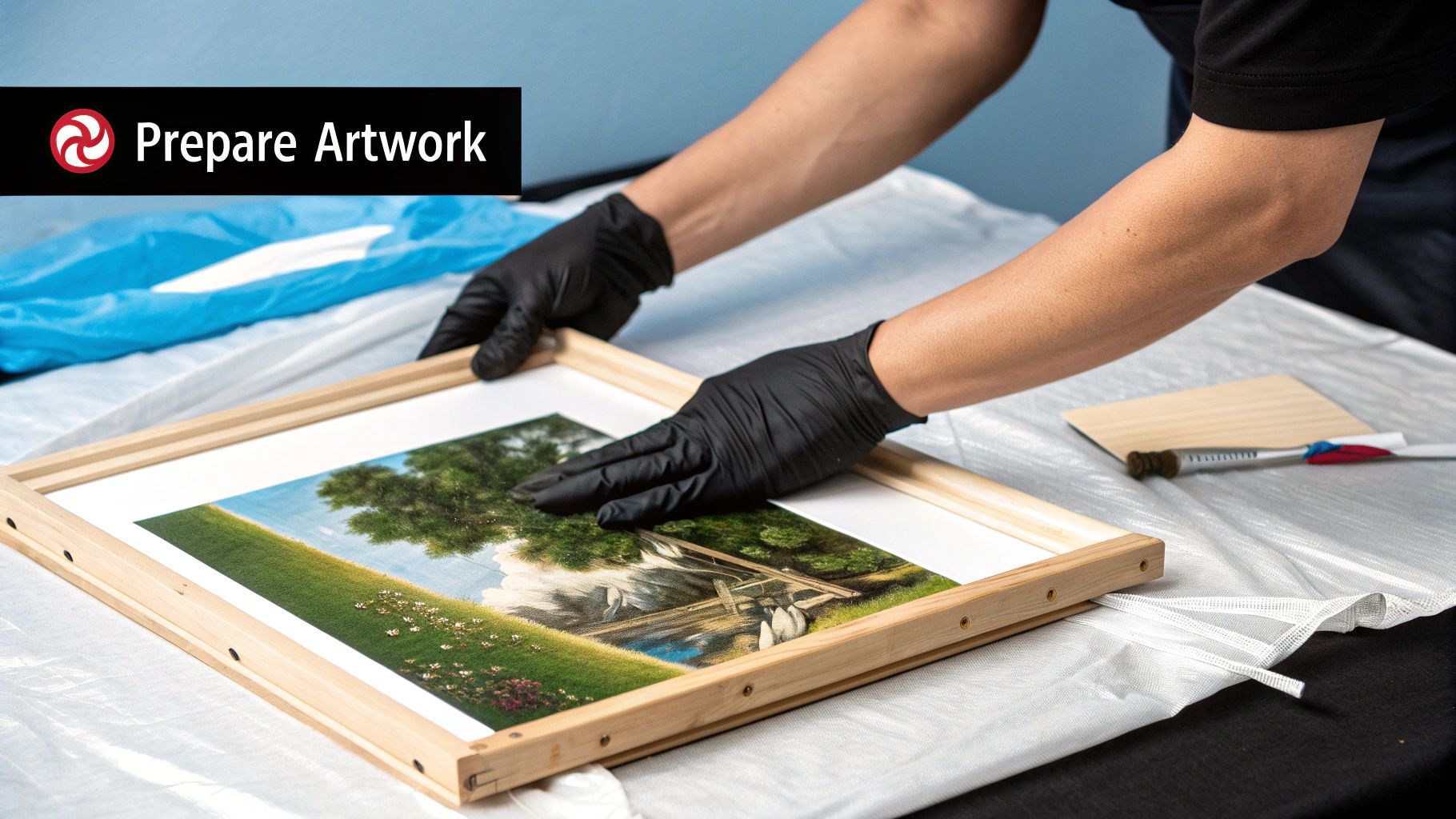
It’s like creating a complete dossier for your painting. You'll want to start with a careful physical examination. Look closely at the front, back, and even the frame for any hidden details. Sometimes a faint signature, a nearly invisible date, or an old gallery sticker can be the key that unlocks its entire history.
Uncovering Your Painting's History
Beyond the art itself, the single most important element is its provenance. This is the documented history of its ownership, and a strong, traceable provenance can radically boost a painting's value. It offers proof of authenticity and creates a narrative that collectors and buyers find irresistible.
Here are a few practical places to start your search:
- Family Archives: Dig through old boxes of family photos. A picture of the painting hanging in your grandmother's living room back in the 1960s can be incredibly powerful evidence.
- Written Records: Hunt down any related paperwork you can find. This could be anything from original bills of sale and auction receipts to old letters that mention the artwork.
- Exhibition Labels: Check the back of the frame for any labels or markings. These can indicate if it was ever part of a gallery show or public exhibition.
An artwork with a clear and documented history is always more valuable than one with a mysterious past. Provenance isn't just a backstory; it's a critical component of the asset's worth.
This research can feel like a lot of work, but it pays off. When you partner with us, our services include helping you pull together and organize this vital information because we know precisely what appraisers need.
If you’re feeling lost on where to begin, the best first step is to schedule a free consultation with Carolina Estate Services. We can help you get your artwork ready for a successful valuation, which is a cornerstone of our premier online estate liquidation services.
How to Find a Qualified Painting Appraiser
Once you've pulled together your painting's history, the next move is finding the right expert to evaluate it. This is a critical step. Not all appraisers are created equal, and connecting with a specialist who understands your artwork's niche is the key to an accurate valuation.
The art world is incredibly diverse. An appraiser who is a master of 19th-century portraits probably isn't the best choice for a contemporary abstract piece. This is why our service focuses on connecting you with the right expertise through our curated network of certified specialists. It's a core part of the value we provide for our clients every day.
Credentials and Specialization Matter
When you're figuring out how to get a painting appraised, always look for professionals with recognized credentials. Certifications from respected organizations signal a commitment to ethical standards and ongoing education.
Here are a few key credentials to look for:
- Appraisers Association of America (AAA): One of the leading national associations for personal property appraisers.
- International Society of Appraisers (ISA): Another highly respected organization that offers top-tier education and certification.
These memberships ensure the appraiser follows the Uniform Standards of Professional Appraisal Practice (USPAP), the quality control standard for the industry. While a generalist can offer a broad opinion, a specialist’s focused knowledge truly uncovers market value.
A qualified appraiser is your strategic partner in understanding an asset's worth. Their expertise is essential for navigating the thriving art market, which was estimated at USD 552 billion and is expected to grow. You can learn more about the expanding wall art market on fortunebusinessinsights.com.
We simplify this whole search for you. Our process involves matching your specific artwork to an appraiser in our network with the precise expertise needed. This completely eliminates the guesswork and ensures your painting is evaluated by someone who understands its context, its artist, and its place in the market.
This is a vital first step, especially when you're considering our online estate liquidation service. A credible appraisal is exactly what you need to attract serious global buyers. The easiest way to get started is with a free consultation with Carolina Estate Services. We can discuss your painting and explain how our network and appraisal services for estate liquidation work together to maximize your returns.
What to Expect During the Appraisal Process
So, you’ve picked your expert. Now the journey to uncover your painting’s true value begins. This isn't a quick guess; it's a methodical process that blends hands-on examination with serious market data research. As part of our service, we manage this process to ensure the final number is both clear and defensible.
The whole thing kicks off with a detailed physical inspection. An appraiser will get up close and personal with your painting, looking at everything from the condition of the canvas to the specific materials used. They’re searching for the little clues that tell the artwork’s story—things like the artist's signature brushstroke patterns or subtle signs of past restoration work.
From Physical Art to Market Data
After the hands-on review, the appraiser shifts into a deep-dive research phase. This is where they connect your painting to the wider art world. They'll meticulously cross-reference auction records, analyze current market trends, and dig through historical artist databases. It's this painstaking work that grounds the physical piece in the reality of the global art market.
This graphic gives you a great visual breakdown of a typical art appraisal workflow, from that first meeting all the way to the final report.
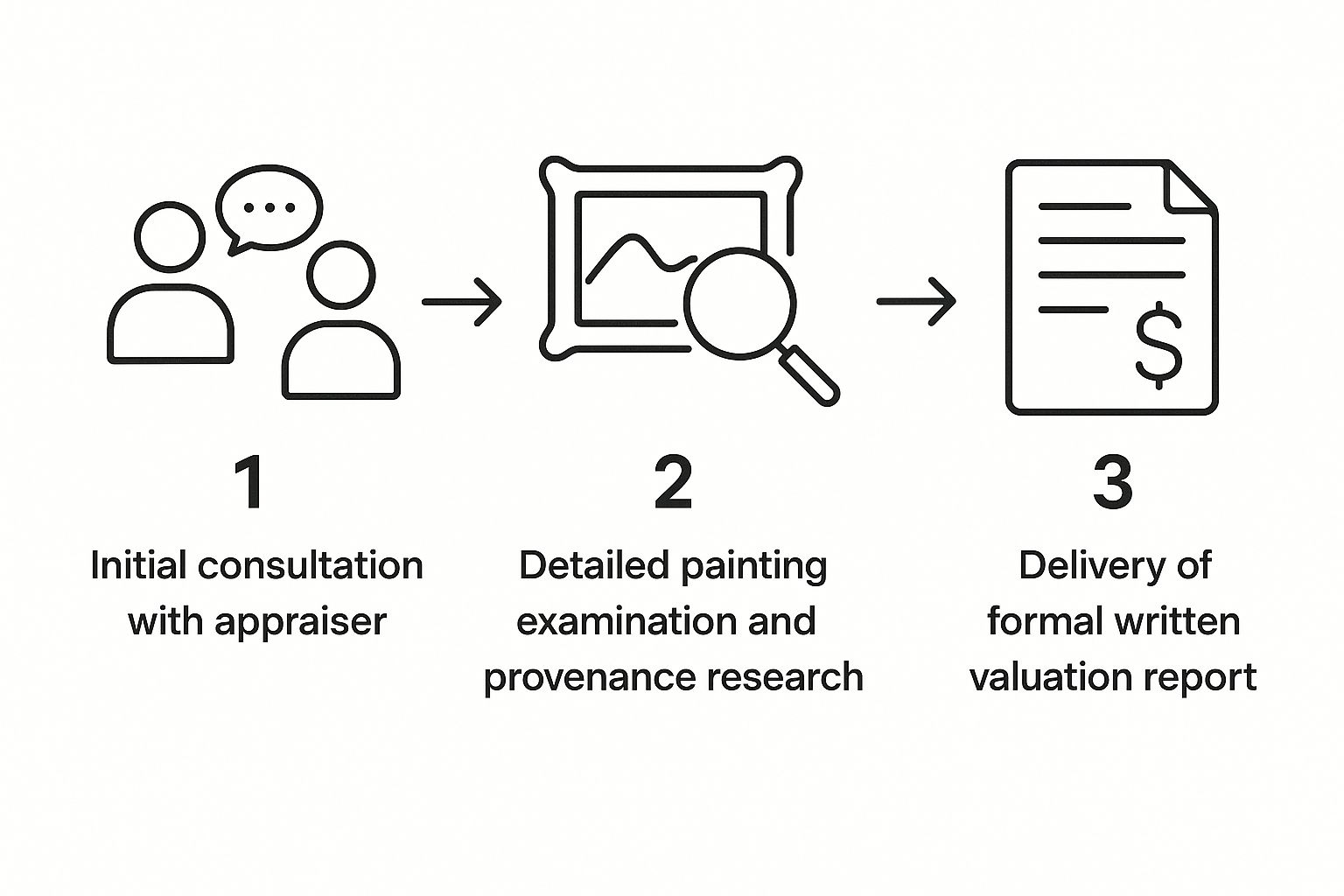
As you can see, a professional appraisal is a structured, multi-stage process. It’s the combination of an expert's trained eye and thorough market research that produces a valuation you can actually rely on.
Understanding Different Valuation Types
A crucial part of the process is figuring out the right kind of value for your specific situation. Art valuation isn't a one-size-fits-all deal. There are several types, and each serves a distinct purpose.
Knowing which type you need is essential, whether you're preparing for an insurance claim, settling an estate, or planning a sale. Below is a quick look at the most common valuation types we help our clients navigate.
| Valuation Type | Primary Use | Determined By |
|---|---|---|
| Fair Market Value (FMV) | Estate settlement, taxes, charitable donations, equitable distribution | What a willing buyer would pay a willing seller, with neither being under compulsion to buy or sell and both having reasonable knowledge of relevant facts. Often based on recent comparable sales at auction. |
| Replacement Value | Insurance coverage and claims | The cost to replace the item with a similar one of comparable quality from a retail source, such as a gallery. This is typically the highest valuation. |
| Liquidation Value | Forced or quick sales, bankruptcy | The amount of money that could be obtained from a sale when the seller is compelled to sell quickly, often at auction. This value is usually lower than FMV. |
| Marketable Cash Value | Private sales | A realistic estimate of what a piece might sell for in the current private market, factoring in condition and demand. This can be more flexible than FMV. |
Choosing the correct valuation is just as important as the dollar figure itself. An expert appraiser guides you to the right choice based on your goals.
An appraiser will help you clarify which valuation is appropriate for your goals. Getting the right type of value is just as important as getting the right dollar amount, especially when it comes to estate liquidation.
At Carolina Estate Services, we manage this entire journey for you. We coordinate with the appraisers, make sure the correct valuation type is sought, and then help you understand the final report. This hands-on management is one of the top benefits of using appraisal services during estate liquidation. Our approach is designed to give you a clear, actionable appraisal without adding stress to your plate. To discuss your needs, schedule a free consultation with Carolina Estate Services today.
Turning Your Appraisal into Action
So, you have the formal appraisal report in hand. What now? A lot of people see that number and think it's the finish line, but it's really the starting line. That document is a strategic tool that unlocks your painting's financial potential for whatever comes next—insurance, estate planning, or a sale.
The real question is how to turn that appraised value into an actual result. This is exactly where our expertise at Carolina Estate Services shines. Our specialty is taking that appraisal and turning it into a successful outcome through our expert online estate liquidation process. This isn't your grandmother's local estate sale; it's a modern, global approach.
Maximizing Reach and Returns
Why does online estate liquidation matter so much over traditional estate sales? Simple. A traditional sale limits you to buyers in a single geographic area. But our online platform connects your artwork with a global network of collectors and motivated buyers who are actively searching for pieces just like yours. This expanded reach is critical for fine art, as it creates a far more competitive bidding environment and, almost always, a better final sale price.
Your appraisal is the foundation for our entire sales strategy. With that valuation, our team can:
- Set a strategic reserve price to make sure your painting’s baseline value is protected.
- Market the piece with confidence, using a credible, expert-backed valuation to attract serious inquiries.
- Build trust with buyers by offering them transparent, documented proof of the painting's worth.
An appraisal gives your artwork a voice in the market. It tells a story of value, authenticity, and significance that resonates with collectors worldwide, transforming a personal treasure into a global asset.
Our white-glove service handles everything from start to finish. We take care of the professional cataloging, targeted marketing, managing the final transaction, and even the secure shipping. If your painting’s appraisal showed a big jump in value and you're thinking of selling, it's also smart to get a handle on the tax implications by understanding capital gains taxes.
We manage the entire journey, making sure you realize the full value identified in your report. The most logical next step is to explore our complete approach to asset appraisal and estate liquidation.
If you're ready to see how we can put your appraisal into action, we invite you to schedule a free consultation with Carolina Estate Services today.
Frequently Asked Questions About Art Appraisal
When you're considering an appraisal for a painting, a few questions almost always pop up. It's a process that many people aren't familiar with, so let's clear up some of the most common points right now.
How Much Does It Cost to Get a Painting Appraised?
The cost can vary, depending on the appraiser's expertise and how deep the research needs to go. Reputable appraisers will typically charge a flat fee or an hourly rate. A critical thing to remember is they should never charge a percentage of the painting's value. This is a major ethical standard that ensures their final assessment is completely unbiased. We connect our clients with trusted professionals who adhere to these standards.
How Do I Know if My Painting Is Worth Appraising?
Not every painting needs a formal appraisal, but if you have a feeling a piece has significant value, it's a smart investment. Was it created by a well-known artist? Does it have a fascinating history or provenance? If so, an appraisal is probably a good idea.
This is often the very first step in our online estate liquidation service. An appraisal uncovers the true market potential before we think about a sale. Our initial free consultation with Carolina Estate Services is a great way to talk it through and decide if a formal appraisal makes sense for you.
What’s the Difference Between an Appraisal and a Valuation?
People often use these terms interchangeably, but they're quite different. Think of a valuation as a more informal opinion of what something might be worth.
An appraisal, on the other hand, is a formal, legally defensible document created by a qualified professional for official purposes—like insurance, estate settlement, or taxes. Our services are built around securing these formal appraisals to properly support our online estate liquidation and appraisal services for estate liquidation.
An appraisal provides the official documentation needed to protect, insure, or sell your art with confidence. It's the foundation for any serious financial transaction involving your painting.
At Carolina Estate Services, we don't just recommend appraisals; we integrate them directly into our comprehensive estate management plans, guiding you from the initial valuation all the way to the final sale. Let our expert team support you through the entire process, including our premier online estate liquidation and estate clearance and cleanout help.
Schedule your free consultation with Carolina Estate Services today to learn more about how we can help.


